News
Minimax Protects Deep-freeze Warehous of Coppenrath & Wiese
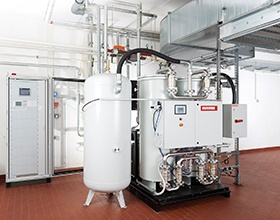
Sustainability in fire protection: Minimax has equipped Coppenrath & Wiese's deep-freeze warehouse in Osnabrück with a special oxygen reduction system: Minimax OXEO ECOPREVENT FC/VG.
The award-winning system generates nitrogen by means of a connected fuel cell. This solution is particularly economical: During power generation, the fuel cell produces clean, nitrogen-rich exhaust air as a by-product, which can be used for oxygen reduction. With this environmentally friendly solution, a return on investment can even be achieved, since the significant energy costs of the nitrogen generator that would otherwise be required are eliminated.
The Coppenrath & Wiese deep-freeze warehouse based in Osnabrück comprises 97,540 m3 in three protected areas. The temperature is around -22 °C. By introducing nitrogen, the oxygen concentration is reduced from 21% by volume (normal) to approx. 15% by volume and can still be accessed by verified personnel.
Saving up to 650 tons of CO2 annually
The fuel cell consistently delivers just under 100 kW of electricity (equivalent to 876,000 kWh/year) and just under 100 kW of thermal power, which the company uses to cover part of its energy load (electricity and heat). Whereas 132 kW was consumed with the old system, 86 kW of electricity is now generated on balance.
More information
Oxeo EcoPrevent FC fire prevention systems
Oxeo EcoPrevent VG fire prevention systems
VdS-BrandSchutzTalk
Schutzkonzepte für brennbare Flüssigkeiten
Produktmanager Thorsten Gieseke stellt die Gefahrstofflager-Lösung LiquidProtect von Minimax vor.
Das Löschen brennbarer Flüssigkeiten ist eine hochkomplexe Angelegenheit und wird immer wieder heiß diskutiert. Verschiedene Regelwerke beschäftigen sich damit. Trotzdem besteht immer wieder der Bedarf an neuen, innovativen Lösungen. In diesem Talk werden Experten aus renommierten Hersteller- und Errichterunternehmen sowie von VdS verschiedene technische Lösungen vor- und einander gegenüberstellen.
Moderator ist der Technische Sachverständige der Allianz, Carsten Tormöhlen. Als Experten nehmen Frank Bieber, VdS Schadenverhütung GmbH, Stefan Falk, Calanbau Brandschutzanlagen GmbH, Thorsten Gieseke, Minimax Europe/FSG und Torsten Wagner, Wagner Group GmbH, teil.
Die Teilnahme an der Talk-Runde ist kostenlos. Anmelden können sich alle Brandschutzinteressierten auf der Homepage des VdS. Hier können Sie dann auch die Übertragung der Talks am 29. April 2021 live mitverfolgen.
Sprinkler protection system for hazardous goods warehousing facilities
Minimax presents new fire protection solution LiquidProtect
Minimax has received approval from the German Association of Property Insurers (VdS) for their innovative fire protection solution, which protects hazardous goods warehouses by means of a sprinkler system using a foam agent. This concept combines high safety for people and the environment with a very fast, effective and localized firefighting. Moreover, the system helps to minimize operational downtimes in the event of fire, and there are very few construction requirements. It can be used in warehouses with large containers such as IBC and warehouses with narrow aisles.
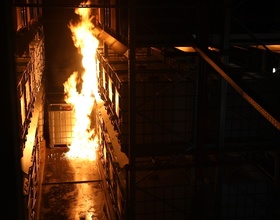
The concept is based on several modules interacting with each other. In the event of a fire, spilling fluid is deliberately directed to the rack aisles with the help of sloped rack stands and baffles installed in the racks. So-called fuel stops are embedded in the floor at regular intervals along the aisles, which collect the flammable fluid, preventing it from spreading along the aisles. Special sprinklers are placed near the fuel stops, ensuring early release and targeted distribution of the water-foam mixture into the aisles. Additional quick-release sprinklers distribute water and a special foam agent into the racks. This concept enables rapid, effective and localized firefighting, helping to keep fire damage and operational downtimes to a minimum.
High personal safety and environmental protection
This fire protection system does not involve complete flooding of the protected room with firefighting agent. Consequently, it offers a higher degree of safety compared to agents hazardous to humans, such as high expansion foam or CO2. With the sprinkler solution there is also less danger of firefighting agent spreading to lower levels or neighboring areas. The early and localized firefighting, combined with fairly small amounts of water-foam used to fight the fire contribute to a better environmental footprint.
Very fast and effective firefighting
The sprinklers are arranged at close intervals, both in the racks and in the aisles, facilitating early fire detection and immediate firefighting without any pre-warning period. Together with the fuel stops and the use of a special foam agent, fast, raging fires can be fought effectively – which is essential in case of flammable liquids spilling from large bulk containers.
Minimal operational downtimes in the event of fire
Only the sprinklers in the affected area release and the fire is rapidly fought resulting in little primary and secondary damage. This includes thermal stressing of the building and rack structures, corrosion or short circuits due to the flooding of technical installations (control panels, ventilation systems, conveying equipment). The subsequent removal of the firefighting agent is also far easier than in a building completely flooded with high expansion foam.
Protection for industrial gas turbines
A new animated film for our TurbineProtect solution shows how we effectively protect turbines from fire.
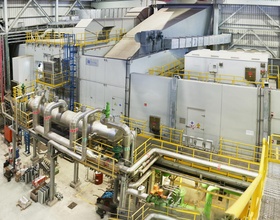
Industrial gas turbines, which are used in the oil and gas industry, for example, drive generators for power generation or compressors (mechanical drives) for gas compression or gas liquefaction. The operating temperature inside turbine acoustic enclosures can reach up to 120°C and the surface temperature of the turbine itself up to 800 °C. Oils leaking from the leaks in oil pipelines can easily get ignited on these hot surfaces. Once lit, a fire can quickly spread to other areas due to the high air flow rate actually used for cooling. Long downtimes and higher costs are often the result. Our flexible fire protection solution: TurbineProtect. https://www.minimax.com/de/en/solutions/solutions-risks/turbineprotect/
Fire protection as a competitive advantage
Recycling industry finds out at Recycling-Technik in Dortmund
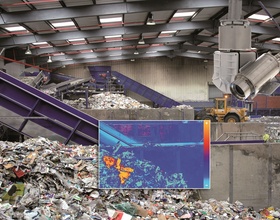
The rapidly growing industry of recyclable material processing finds itself confronted by a high level of fire risk. People, environment and companies are regularly threatened by large fires. Many business operations are now upgrading and in doing so are attaching importance to a comprehensive fire protection concept. On 07-08/11 at Recycling-Technik in Dortmund, Minimax is showing what such a concept should look like (hall 7, stand T26).
Delivery and storage areas - detecting hot spots
There is a risk in these areas that stored substances will auto-ignite. Here, internal areas are particularly at risk, since dust can create an explosive atmosphere. In order to detect potential ignition hazards in good time, the recyclable material storage areas are constantly monitored. Thermography systems with infra-red cameras are used for this wide-area early detection of fire. They detect objects by their radiative heat transfer and spot critical temperature developments. If there is a threat of ignition, a signal is transmitted to the connected fire detection control panel. Extinguishing monitors are aimed at the target manually or via remote control. They provide effective fighting of the so-called hot spot via water enhanced with film-forming foam compound. Active smoke aspiration systems and industrial flame detectors provide extra security in internal areas. They can also cope with particularly tough environmental conditions and dependably detect potential fires. Their signals are sent to a fire detection control panel which evaluates them and in an emergency activates automatic extinguishing by a deluge system.
Mechanical conveyor systems - safety in motion
During the sorting process, recycling materials are continually transported via conveyor belt systems. This means multi-faceted risks: overheated roller bearings, sparks which may occur during maintenance- or welding work, or auto-ignition of the material to be conveyed. The combined installation of industrial flame detectors and multi-sensor combustion gas detectors is a proven fire-safety measure for dependable and early detection of a fire. Minifog ProCon water mist systems are a particularly efficient solution for direct fire fighting. After a fire has been detected, the section of the conveyor belt is extinguished and operation can be continued without major downtime. The crucial advantage of this extinguishing system compared with conventional water spray systems is the significantly lower use of extinguishing water.
Pneumatic suction and conveyor systems - no opportunity for sparks
Wherever flammable materials are pneumatically transported, there is an increased risk of fire. This applies particularly to the material mix in pneumatic suction and conveyor systems in the recycling process. Sparks, hot particles or glowing embers in the processing machinery which arrive in the delivery systems have risk potential. Dust explosions are also possible. Functionally monitored spark detectors which react to infrared radiation of potential sources of ignition flying past, ensure dependable and above all immediate detection. If the spark detectors identify potential sources of ignition in the materials being conveyed, a signal is sent to the control panel. This unit then activates the automatic extinguisher solenoid valve in milliseconds. The extinguishing water is released and introduced into the volumetric flow via self-closing nozzles. The glowing particles fly into the water mist formed by the nozzle. Particularly innovative spark detectors, such as the UniVario YMX5000 detector range, themselves monitor their optical system with regard to dirt or damage at regular intervals. Functions such as these increase operational safety in the challenging areas of application in a recycling facility.
For an integrated fire protection concept however, all areas of a recycling complex must be thought of. For this reason separation and crushing facilities, agglomeration presses or even ancillary areas such as server or control rooms and office buildings must also be taken into consideration.
We look forward to welcoming you to our stand, T26 in hall 7 at Recycling-Technik in Dortmund.
International LNG congress in Barcelona
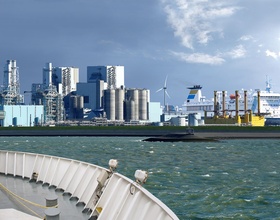
Marcel Ruesink from Minimax answered the question how to mitigate fire events for LNG facilities at the LNG congress in Barcelona on 16-17 October 2017.
LNG facilities are exposed to fire risks. When a fire occurs due to failing equipment or inadequate fire control and protection measures, extended business disruptions may be the consequence. These will cause substantial costs and, at worst, may cause customers to turn to new suppliers elsewhere, if the delivery delays continue. The consequences originates due to the nature of LNG processing, the potential disperse of vaporized natural gas with its high fire load and rapid fire spread. The risk can be reduced by detection, fire control and/or extinguishing systems.
LNG fire has challenging facets. Minimax has the right fire control and protection solution for the various LNG facilities. Recommended fire control and protection applications which suit the requirements of LNG facilities are for example vaporization reduction with Hi-Ex foam, gas cloud dispersion control by water curtains, fire suppression with dry chemical and suppression system with inert gas systems for fire risks in enclosures like compressors and plant utilities.
Minimax understands the safety management issues at LNG operations and has in-depth know-how of codes and standards for fire protection, like IMO IGC (81/224), NFPA, EN & BS (66/224). Additionally Minimax has the ability to adopt local requirements, great track record on successful project completion and a company culture to meet expectations of global acting companies.
Minimax provides tailored solutions wherever there is a fire threat and has a widespread fire protection experience on industrial applications, including LNG facilities, jetties, loading manifolds, compressors, machinery rooms, steam and gas turbine driven power plants. So Minimax has the competence on both landbase and marine projects and the experience to integrate them.